
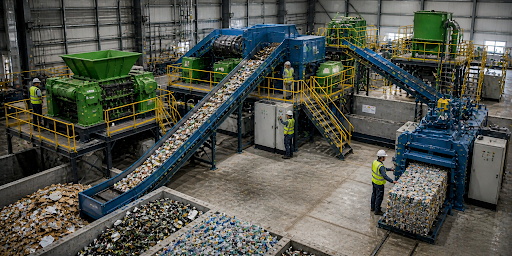
As industries continue expanding worldwide, waste generation has become one of the major environmental and operational challenges facing modern businesses. Manufacturing facilities, construction projects, processing plants, and commercial operations produce significant amounts of waste that require proper handling and disposal.
Because of these challenges, industrial waste recycling has become increasingly important for supporting environmental sustainability and improving resource management. Recycling systems help industries reduce landfill waste while recovering reusable materials that can support long-term operational efficiency.
Modern businesses are now placing greater emphasis on sustainable practices to meet environmental goals and regulatory expectations.
Understanding Industrial Waste Recycling
Waste recycling refers to the process of collecting, sorting, processing, and reusing waste materials generated during industrial operations. These materials may include metals, plastics, paper products, construction debris, chemicals, and manufacturing byproducts.
The demand for industrial waste recycling continues to grow as industries seek more efficient ways to reduce waste disposal costs and improve environmental responsibility.
Recycling programs help divert reusable materials away from landfills while supporting the recovery of valuable resources that can re-enter production systems.
In many sectors, waste recycling also contributes to energy conservation and reduced raw material consumption.
Environmental Benefits of Recycling Systems
One of the most important advantages of waste recycling is its positive environmental impact. Recycling helps reduce the volume of waste sent to landfills, lowering the risk of soil contamination and environmental pollution.
By reusing materials, industries can also reduce the demand for extracting new raw resources, which helps conserve natural ecosystems and reduce environmental strain.
Recycling operations may also contribute to lower greenhouse gas emissions because manufacturing products from recycled materials often requires less energy compared to producing materials from raw resources.
As sustainability regulations continue to strengthen globally, recycling programs remain an important part of environmental management strategies for many industries.
Improving Operational Efficiency
In addition to environmental benefits, recycling systems can also support operational improvements within industrial facilities. Proper waste management helps businesses organise disposal processes more efficiently while reducing clutter and material handling challenges.
Many companies implementing industrial waste recycling programs focus on improving workflow efficiency and reducing long-term waste management expenses.
Segregating recyclable materials can simplify waste handling while supporting more organised production environments. Businesses may also recover certain reusable materials that help offset operational costs.
Efficient recycling systems often contribute to better workplace organisation and improved compliance with environmental safety standards.
The Role of Technology in Modern Recycling
Advancements in recycling technology continue to improve how industrial waste is processed and managed. Automated sorting systems, compactors, shredders, and waste handling equipment now support faster and more efficient recycling operations.
The future of industrial waste recycling increasingly relies on technology-driven systems that improve material recovery accuracy and reduce processing inefficiencies.
Modern recycling facilities may use sensors, conveyors, and advanced separation equipment to process different waste streams more effectively.
These technologies help industries manage larger waste volumes while improving recycling rates and supporting environmental goals.
As industrial production continues growing, advanced recycling infrastructure will remain essential for sustainable waste management.
Challenges in Industrial Waste Management
Despite the benefits, industrial recycling programs may also face several challenges. Proper waste segregation, transportation logistics, contamination control, and processing costs can all affect recycling efficiency.
Businesses involved in waste recycling often require organised waste collection systems and reliable transportation support to manage recyclable materials effectively.
Employee training and environmental awareness are also important because improper waste handling can reduce recycling effectiveness and increase operational difficulties.
Overcoming these challenges typically requires planning, infrastructure investment, and consistent waste management practices.
Conclusion
Waste management continues to play a critical role in supporting sustainable industrial growth and environmental protection. Many waste management systems also depend on reliable waste transfer trailers to support the safe and efficient transportation of recyclable materials between industrial sites and processing facilities.
Waste recycling helps industries reduce landfill dependence, conserve resources, and improve operational efficiency through better material recovery systems.
As environmental awareness and sustainability regulations continue increasing, recycling programs will remain an essential part of responsible industrial operations.